


The Scoreboard
Comment
Last week, we learned that GLP-1 users are willing to pay more — a lot more — for protein. According to a study published in Food Policy by professors from Arizona State University and Kansas State University, GLP-1 users have a mean “willingness to pay” of $22.99 per pound of ribeye steak, compared to $16.00 for non-GLP-1 users. The gap is even wider for ground beef: $14.76 per pound versus $7.64.

The professors make several relevant assertions. Some excerpts (emphasis mine):
- Beyond healthcare impacts, subsidizing GLP-1 coverage will generate externalities throughout the food system. Broader adoption will alter food purchasing patterns, ultimately changing quantities, WTP, and price sensitivity.
- GLP-1 use is rising rapidly and will increasingly shape US food demand, requiring monitoring and management of related shifts.
- GLP-1 medications significantly shift protein demand independent of income and other factors, highlighting a key link between pharmaceutical and food sectors.
- Previous research shows GLP-1 users consume less meat, yet our results reveal higher WTP for meat products. This apparent contradiction reflects a shift from quantity to quality, where users buy less but value each unit more highly. This behavior aligns with a premiumization pattern, in which individuals reduce total intake while seeking greater satisfaction, quality, or nutrient profiles compatible with successful GLP-1 therapy.
While the paper didn’t cover dairy proteins, some of the themes seem similar, right? Consumers seem willing to pay more for ready-to-drink and ready-to-mix products, presumably with GLP-1 users contributing to the push.
* * *
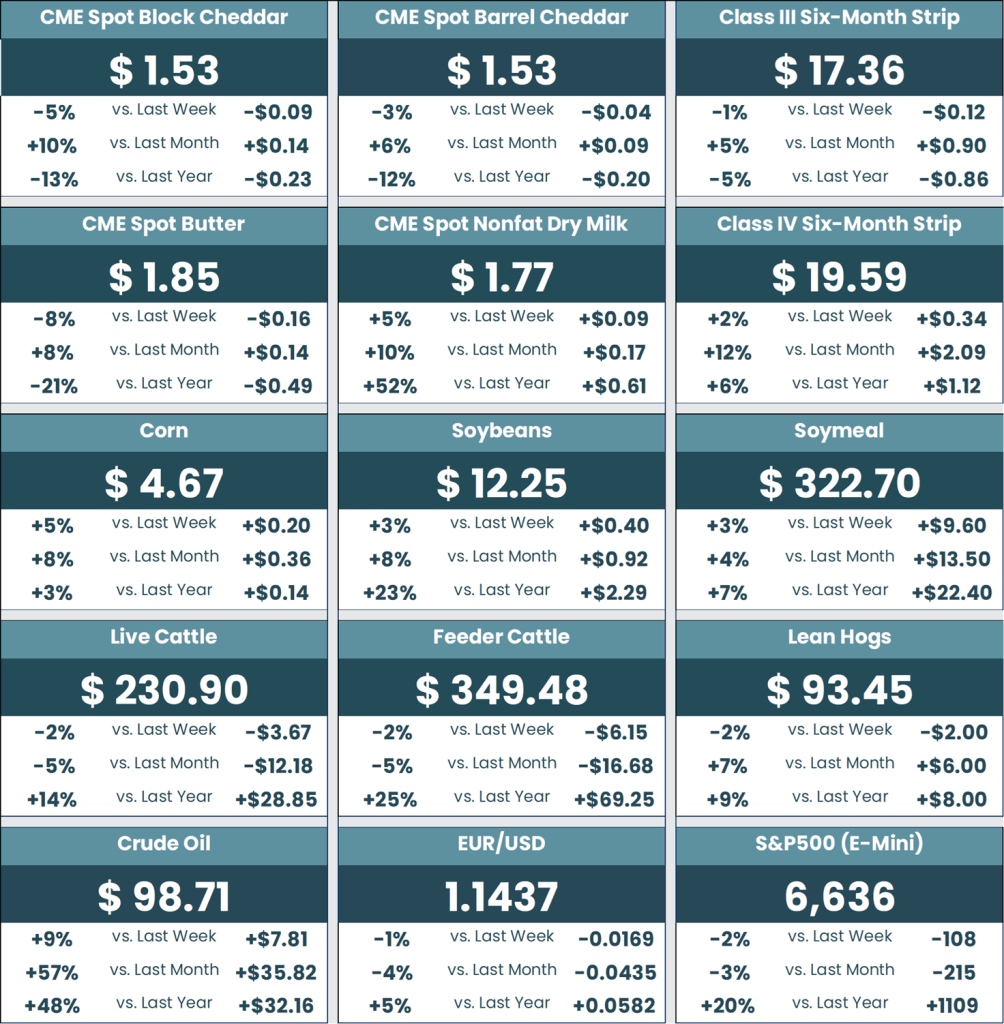
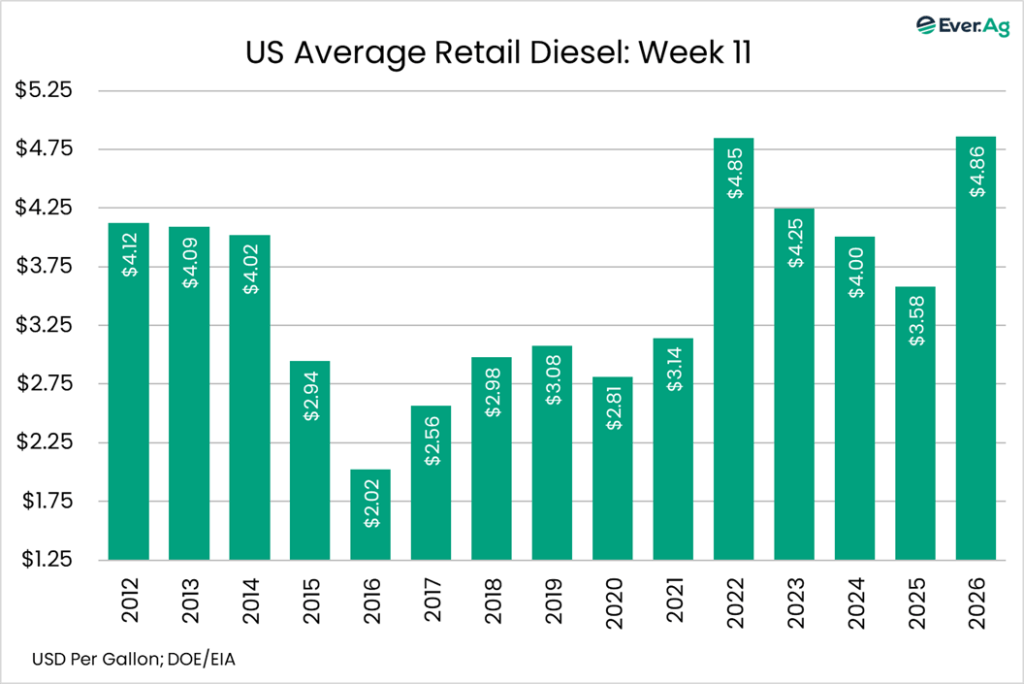
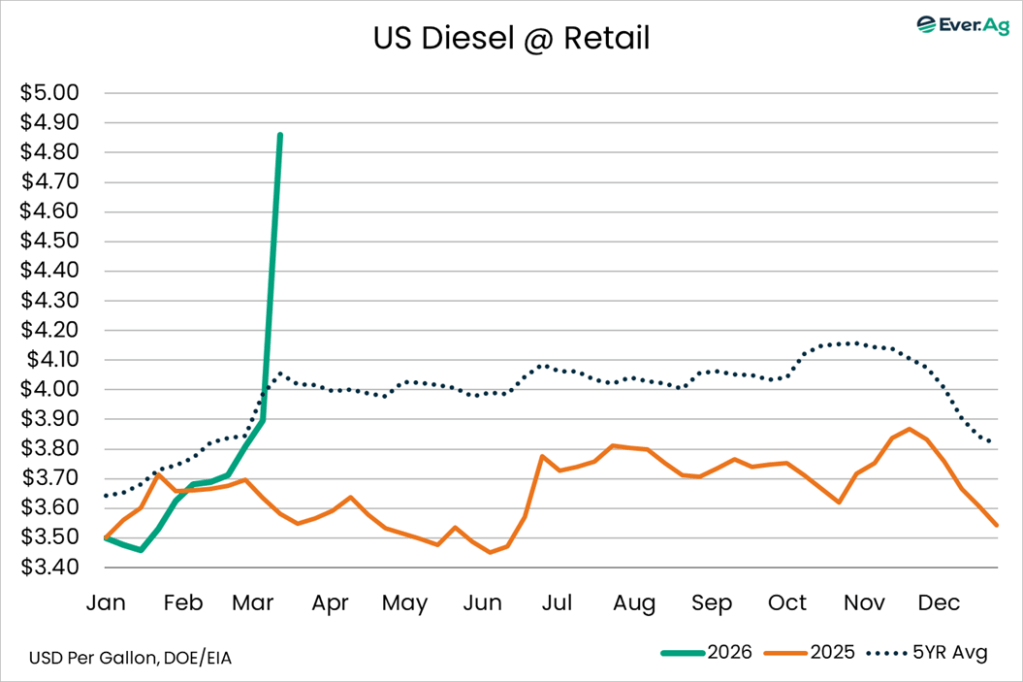
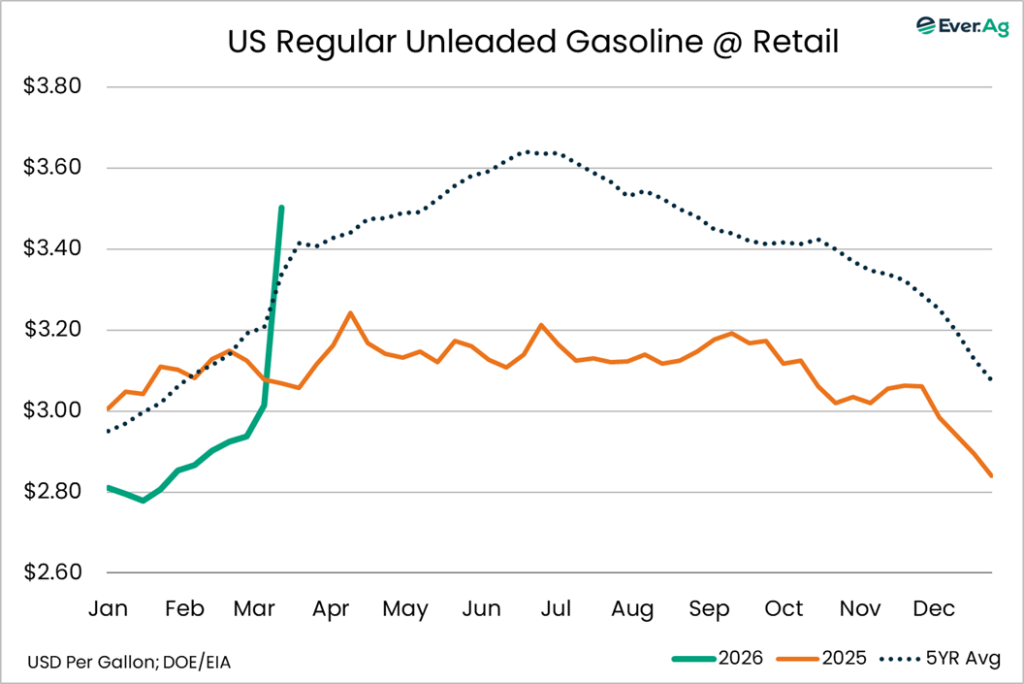
Sharply higher diesel prices will punch consumers, too, even if indirectly. Last week, we discussed concerns about higher gasoline prices siphoning discretionary spending dollars from consumers. That hasn’t changed: WTI crude oil closed Friday at just under $99 per barrel, up 9%. As of Sunday, AAA reported regular unleaded averaging $3.70 per gallon in the US, up from $3.45 a week earlier (+7%). Prices range from a low of $3.13 per gallon in Kansas to a high of $5.51 in California (gulp!). Diesel prices jumped even more, though — reaching $4.97 per gallon on Sunday, up from $3.66 a month ago (+36%). Because more than 70% of domestic freight tonnage moves by truck, higher diesel prices impact the cost of just about everything that moves from Point A to Point B. Eventually, those extra dollars will find their way into prices for everything from food to furniture, potentially with negative knock-on effects on consumer sentiment and demand.
* * *
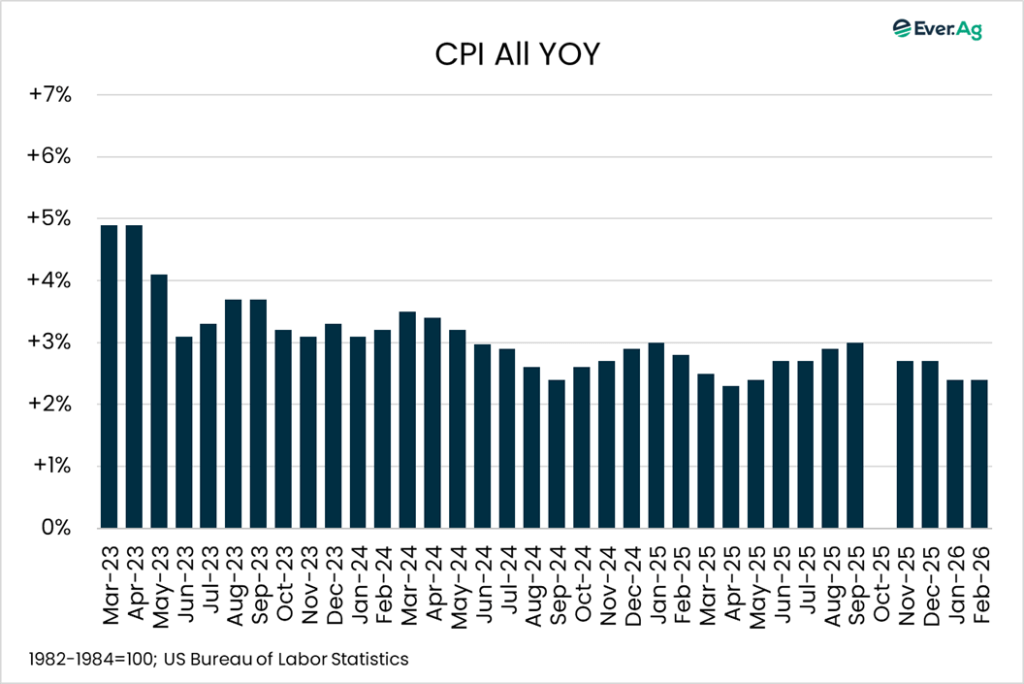
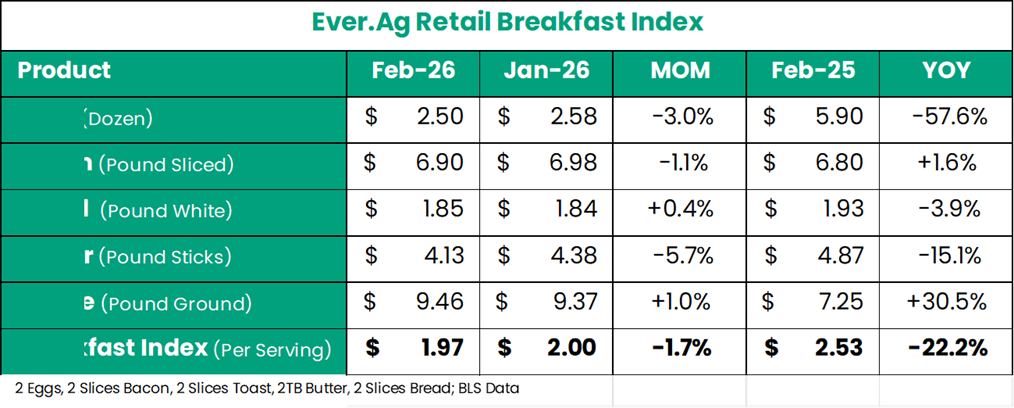
US inflation figures didn’t ring any alarms in February, but that was before energy prices began climbing — and consumers are already perturbed. According to the US Bureau of Labor Statistics, headline CPI gained 0.3% from January to February and increased 2.4% year-over-year, in line with expectations. That compared to +2.4% year-over-year in January and +2.8% in February 2025. Food-At-Home prices increased 2.6% year-over-year, ahead of the headline and the +2.1% seen in January. Food-Away-From-Home prices gained 3.9% year-over-year, above the headline but down a notch from +4.0% in January. The Ever.Ag Retail Breakfast Index came in at $1.97 per serving, down 1.7% from January and down 22.2% year-over-year. Ground beef prices ticked lower on the month, averaging $6.74 per pound, down 0.2% compared to January but still up 19.8% year-over-year.
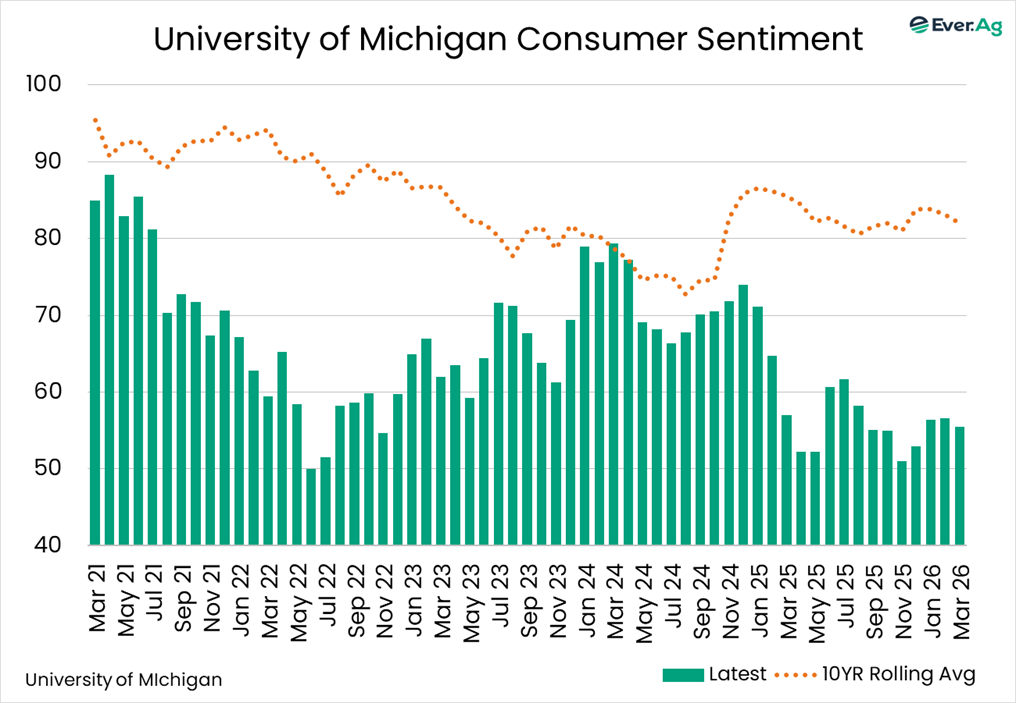
Meanwhile, the preliminary March reading of the University of Michigan Consumer Sentiment Index came in at 55.2, down from 56.6 in February, 57.0 in March 2025 and expectations for 56.2. Survey Director Joanne Hsu pointed out that the prospects for higher gasoline prices didn’t sit well:
Interviews completed prior to the military action in Iran showed an improvement in sentiment from last month, but lower readings seen during the nine days thereafter completely erased those initial gains. Gasoline prices have exerted the most immediate impact… though the magnitude of passthrough to other prices remains highly uncertain. A broad swath of consumers across incomes, age, and political affiliation all reported declines in expectations for their personal finances.
* * *
At a time when restaurants are beginning to wonder about the impact of higher gasoline prices, McDonald’s is preparing to go even harder on value. Nation’s Restaurant News weighed in on the gasoline question, noting:
What we do know is this — higher gas prices correlate with reduced spending on foodservice. According to Technomic research, an increase in gas prices, especially those that result in $4-plus per gallon on average nationally, impacts consumer restaurant spending. As of today, the national average gas price is about $3.60, according to AAA. It is above $4 in six states. Technomic found that nearly 90% of consumers are impacted by rising gas prices and spend less on goods and services to manage such increases. Younger Americans — 18-to-24-year-olds — are the most affected.
McDonald’s was already concerned about value before gasoline prices blew up. It’s been fighting to win back customers for months, first with the reintroduction of “extra value” meals in September and now with new $3 and $4 offerings. According to The Wall Street Journal: The Wall Street Journal:
Starting in April, the world’s biggest burger chain plans to launch new deals and discounts to keep the chain ahead of competitors in the battle for fast-food dollars. McDonald’s new value effort includes a menu of items costing $3 and less, meant to provide more flexibility and choice, according to people familiar with the discussions. The chain is also readying new $4 breakfast meal deals. Golden Arches has been pushing for nearly two years to cement its affordability image. Franchisees, who set their own prices, increased them as inflation surged following the 2020 pandemic. Surveys showed that many fast-food customers no longer considered McDonald’s a good value McDonald’s has framed its new deals, internally dubbed “McValue 2.0,” as a way to focus on the most effective discounts as it seeks to lure back customers, particularly the budget-sensitive. That includes stronger breakfast promotions, as McDonald’s morning meals have experienced the greatest pullback from lower-income consumers, according to an internal company message sent earlier this year and viewed by the Journal. The $4 meal deal will feature breakfast options including a McMuffin, hash brown and coffee. The $3 and less menu will include items like a sausage biscuit or a 4-piece chicken McNuggets, and it replaces the buy-one-add-one-for-a-dollar menu introduced in 2025. Restaurant executives have said they will need to keep promoting deals for the foreseeable future, potentially squeezing profits. At Applebee’s, deals now account for about one-third of what diners buy. “Our perspective is that this is the new normal,” said John Peyton, CEO of Dine Brands Global, the parent of Applebee’s and IHOP.
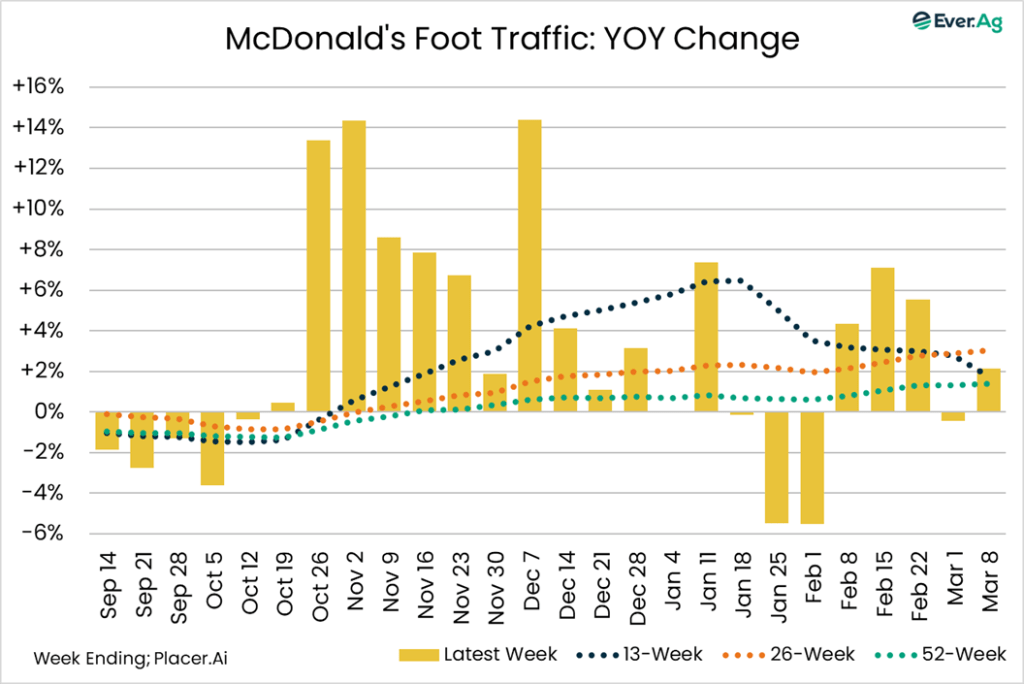
After a strong performance in the fourth quarter, McDonald’s traffic hasn’t been as consistently positive in early 2026. Placer.Ai data has foot traffic up 1.5% year-to-date, year-over-year through March 8, with five up weeks, five down weeks and one flat week. That’s not as impressive as the +5.4% seen in the fourth quarter, which featured 11 weeks up and only two down.
Commodity market analysts are watching because, with more than 13,000 stores, McDonald’s can move the needle for cheese, beef, and chicken consumption.
* * *
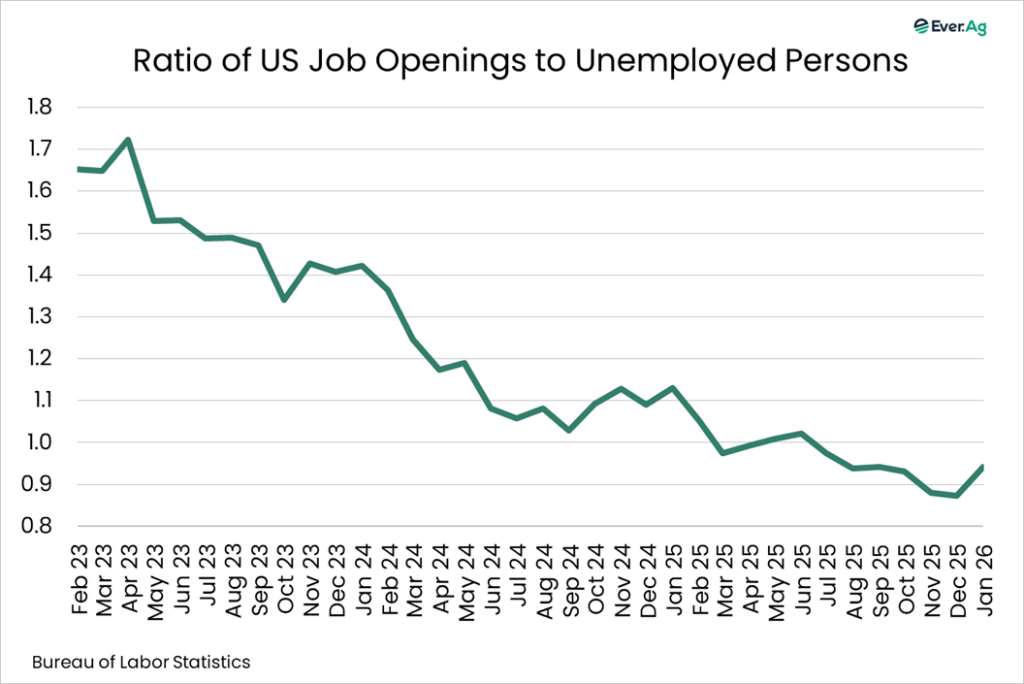
Last week’s employment data included one piece of good news: job openings increased in January. The Job Openings and Labor Turnover Survey report counted 6.95 million openings, up from 6.55 million in December but down from 7.76 million in January 2025. That put the ratio of openings to unemployed persons at 0.94, an improvement from 0.87 in December but below 1.13 in January 2025.
On the week-to-week watch, initial jobless claims remain in the 210,000 to 220,000 area, below year-prior levels.
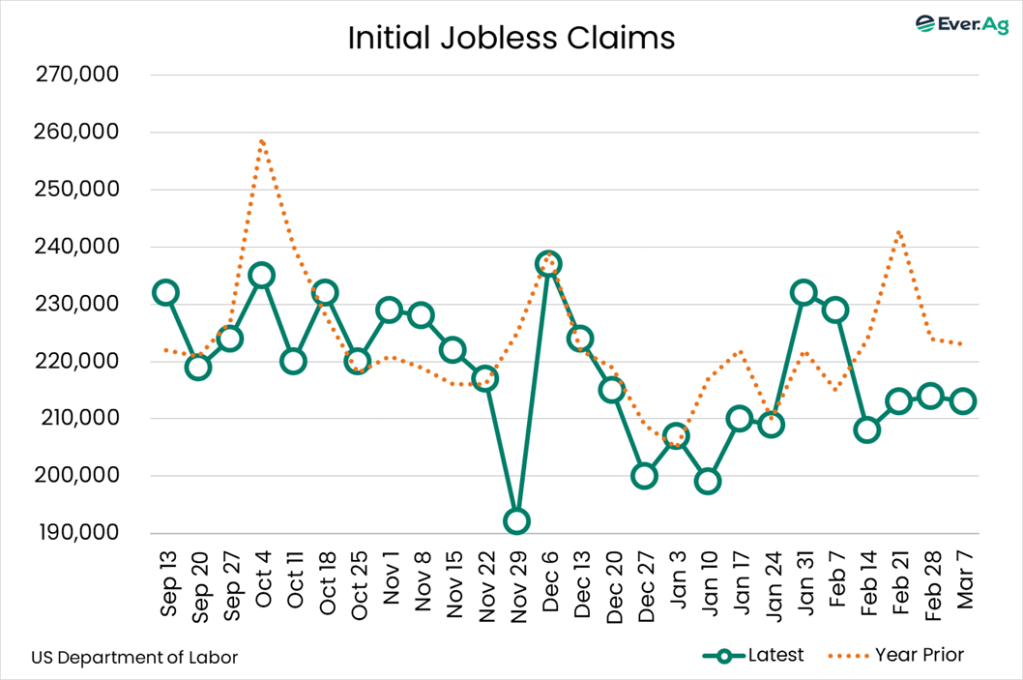
While an unexpected drop in payrolls sparked anxiety two weeks ago, and while the situation may seem tenuous, labor markets don’t appear to be collapsing. As long as that lasts, it’s good news for consumer spending prospects.
* * *
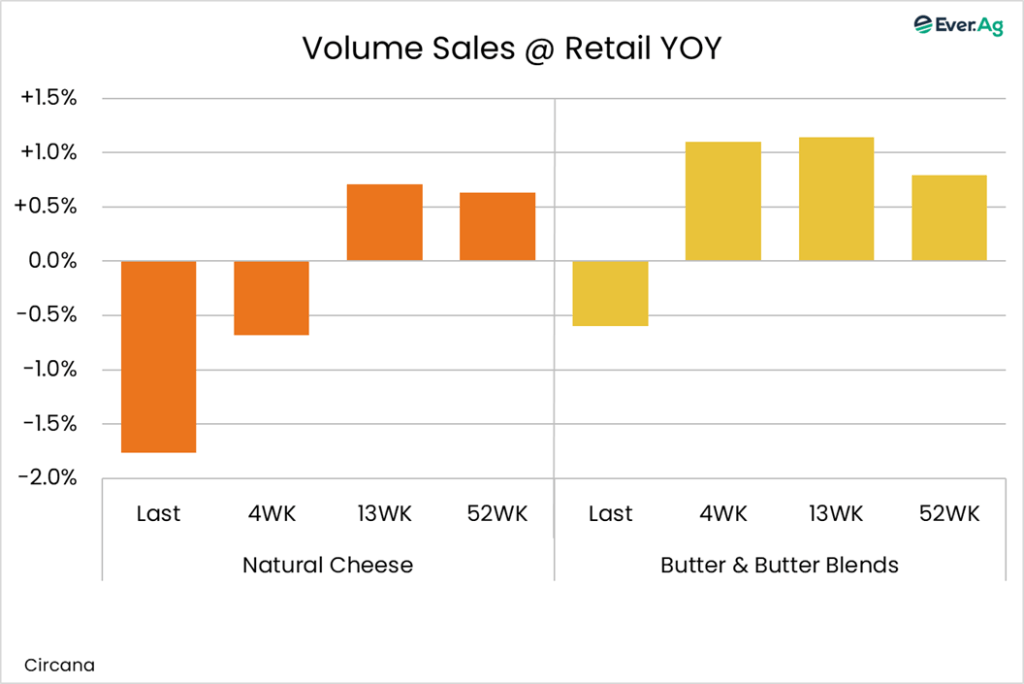
Cheese and butter sales at retail dipped into negative territory during the week ending March 8. Circana reported natural cheese volume declining by almost 2% year-over-year. Average price: $4.88 per pound, down two cents on the week and down 4% year-over-year. Butter & butter blend sales came in fractionally lower, with prices averaging $4.56 per pound, down three cents from the week prior and down 9% year-over-year.
* * *
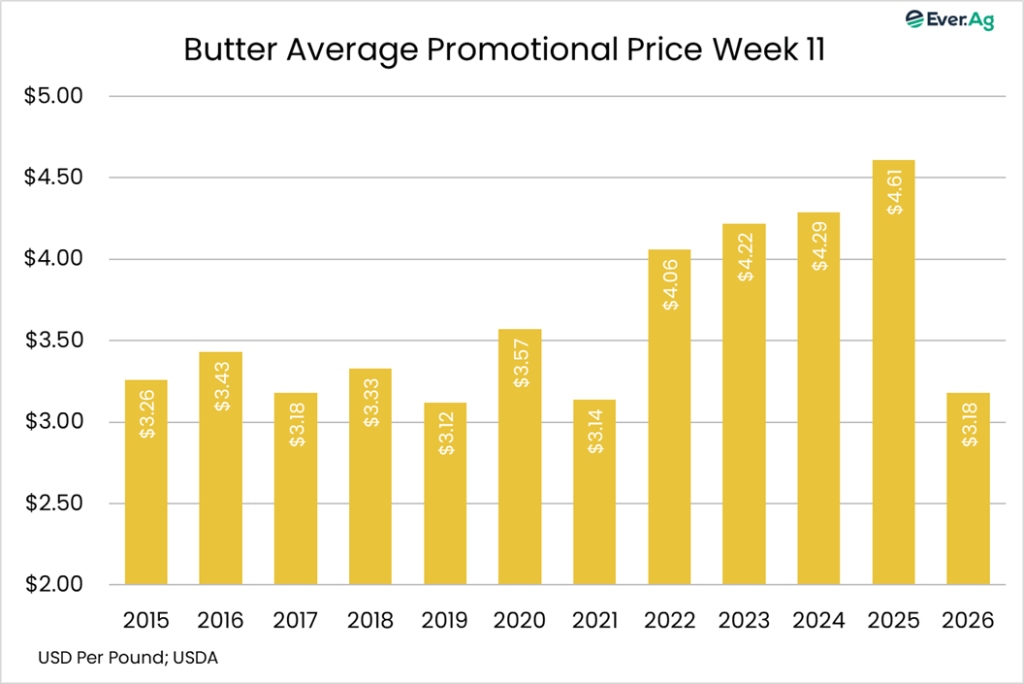
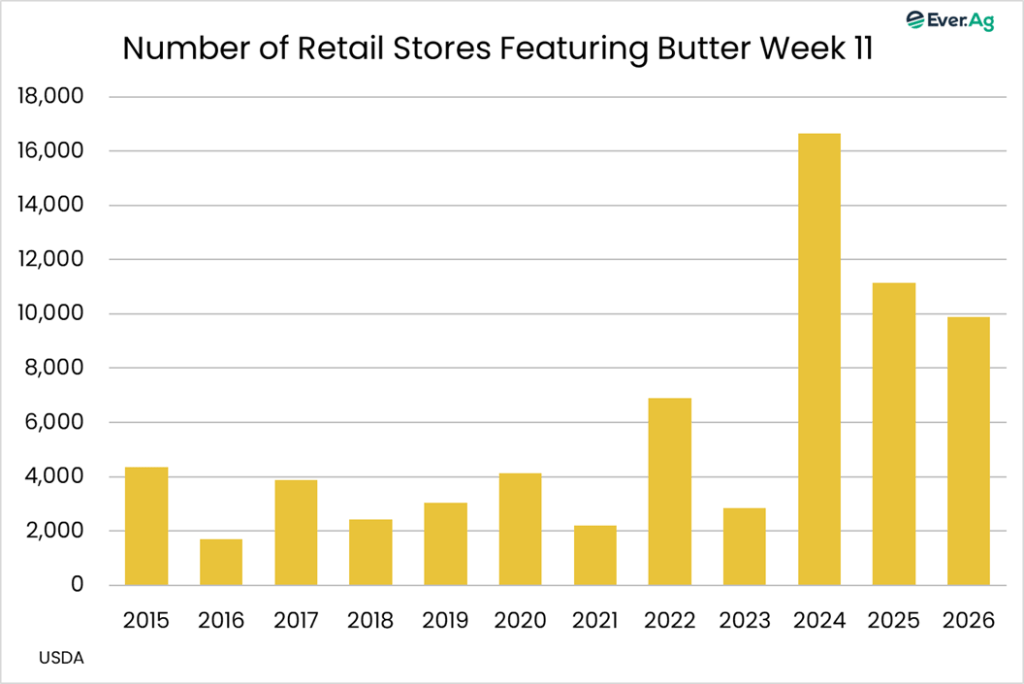
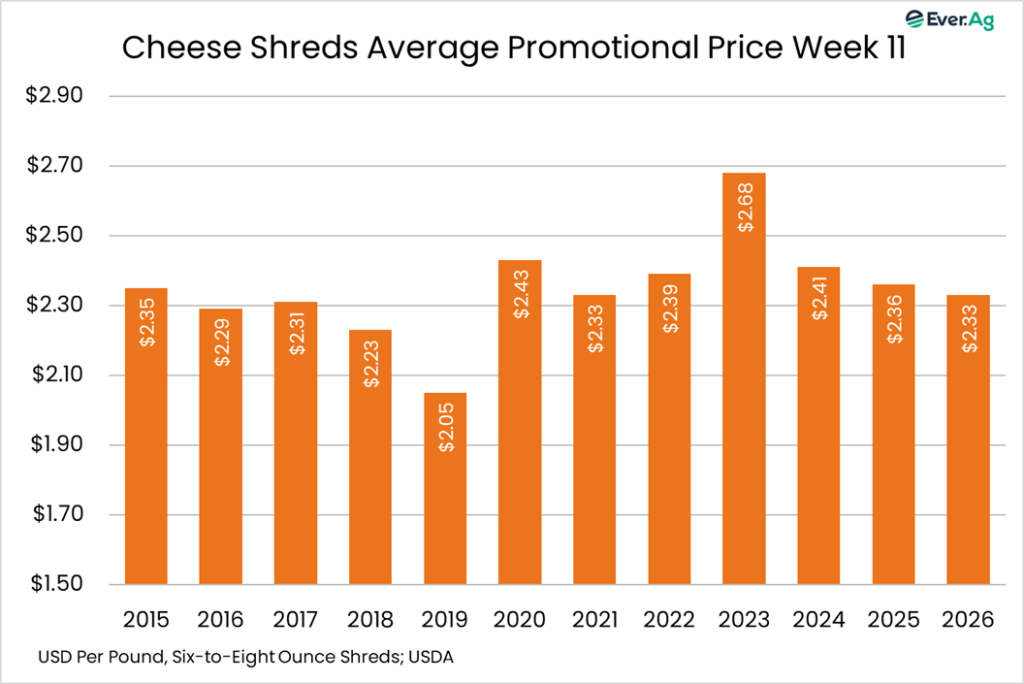
As Easter approaches, we’re seeing one of the hottest national butter deals in years.Kroger outlets have one-pound packages of private-label quarters on sale for $1.49. That helped take the national average promotional price to $3.18 per pound, down 31% year-over-year to the lowest level since January 2022. Other grocers aren’t as active, though, with promotional store count at 9,894 units, up 18% on the week but down 11% year-over-year. The cheese situation this week has the opposite flavor: shreds on sales at 25,152 outlets, the most since at least 2013, but nothing too exciting on price, with the average at $2.33 per six-to-eight-ounce package, up nine cents on the week and down only 1% year-over-year.

Futures and options on futures trading involves significant risk and are not suitable for every investor. Information contained herein is intended for informational purposes and is obtained from sources believed reliable but is in no way guaranteed. Past results are not indicative of future results. Any data contained herein is proprietary and may not be copied, disseminated, or used without the express written permission of Ever.Ag Insights.